
New analysis: when ChatGPT, Gemini and Google name providers at all, measured with real search queries from Austria.Read, in German →
Atziry
Content strategy · SEO and GEO

Content that gets found and cited

No filler. We plan which content your website needs so it gets found in Google and cited as a source by AI systems, and we measure what every piece brings.
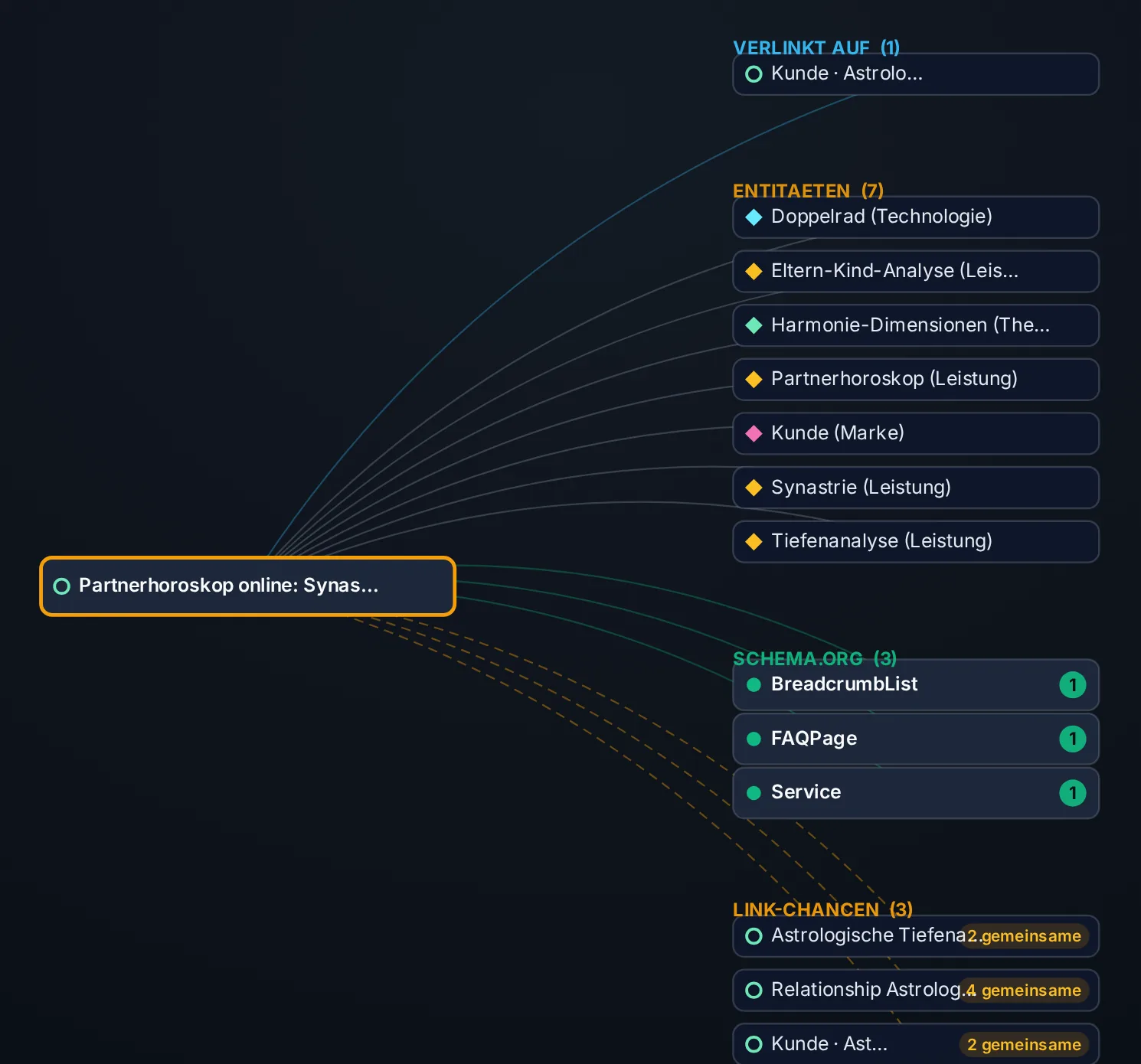

Page profile in the mind map: one page with its links, 7 entities, 3 Schema.org types and 3 suggested links
A real page profile from a client project. Names anonymized, interface in German.
UlliDrawn owl with an orange scarf and a notebook

I only write what someone actually asks.

What is a content strategy?

In plain wordsA content strategy defines which pages and texts your website needs, which question each page is for and how it has to be built so Google finds it and AI systems cite it. Writing comes after that.

Drawn marmot with an orange scarf and binoculars

Look first, then write

Like building a house, there is a plan first. We check what people search for, what they ask AI and what competitors already cover.

Drawn ibex with an orange scarf and a climbing rope on a rock

Every page has a job

No new page without its own search intent. So your pages do not compete with each other, and each answers one question really well.

Drawn owl with an orange scarf and a notebook

Text worth quoting

The answer comes first, claims are backed by numbers and sources. So an AI can take over a sentence without sounding vague.

Why most content brings nothing

Many pages are written before anyone checks whether people search for them. That can be clarified upfront, and that is exactly the job of a content strategy.

96.55%of pages in the Ahrefs index get not a single visitor from Google Search
up to 40%more visibility in AI answers through backed claims, depending on the topic
+25.7%more ChatGPT citations for comparison pages with three tables
95%of questions: no website is cited by all three AI systems

The lever comes before writing: if you know which question a page should answer and which sources AI uses for it today, you write with more focus.

Sources: 96.55%: Ahrefs Search Traffic Study. Up to 40%: Princeton GEO, Aggarwal et al., KDD 2024, effect strongly depends on the topic. +25.7%: AirOps 2026. 95%: measurements in the Atziry platform, December 2025 to October 2026.

What you actually get

Derived from what we really deliver in projects. Not included is the coding on your website, but the specs are written so your team can implement them directly.

AspectDeliverable
Data foundationCrawl of your website and your key competitors, entities and relations as a knowledge graph
Content architectureURL matrix and keyword map per language, clear page roles
Technical specsInternal links, canonical, hreflang and structured data as instructions for developers
ContentPage copy and articles with sources, written separately for each language
Editorial planMulti week plan with formats, voice rules and verified occasions
Measurement planMetrics per page role and reporting in the platform

Our method

Five steps from data to measurement. Every piece has a measurable purpose.

  1. 01
    MurmelDrawn marmot with an orange scarf and binoculars

    Topics from real data

    Search data, questions asked to AI, competitor content and real customer voices from forums, comments and reviews.

    Result: topics with demand

  2. 02
    StoaniDrawn ibex with an orange scarf and a climbing rope on a rock

    Architecture

    Page roles, topic clusters, internal links and a plan for when each piece gets updated.

    Result: URL matrix and keyword map

  3. 03
    UlliDrawn owl with an orange scarf and a notebook

    Write and rework

    New texts and reworked existing pages, with your own numbers, sources, comparison tables and FAQ with Schema.org.

    Result: pages worth citing

  4. 04
    FiniDrawn fox with an orange scarf reading a map

    Distribute

    Get visible where AI systems look for sources: industry portals, comparisons, directories.

    Result: mentions beyond your website

  5. 05
    AronDrawn golden eagle with an orange scarf and a monocle

    Measure

    Rankings, AI citations and leads per page in the platform. So you see which text works.

    Result: metrics per page role

What the mind map revealed

Three findings that would hardly have stood out without the view and went straight into the implementation rules.

Links

Only upward

All 9 internal links ran from a subpage to the home page. The subpages did not link to each other.

Schema.org

Patchy

Only 10 of 24 pages had structured data. Of all pages, the ones where conversions are measured had none.

Link opportunities

Suggested

Pages covering the same entities without linking to each other are flagged by the platform as a suggestion.

Atziry platform

What really resonates
with your audience

For social too: the platform analyzes posts, shows which openers and formats perform better than usual and says when the data is too thin for a conclusion.
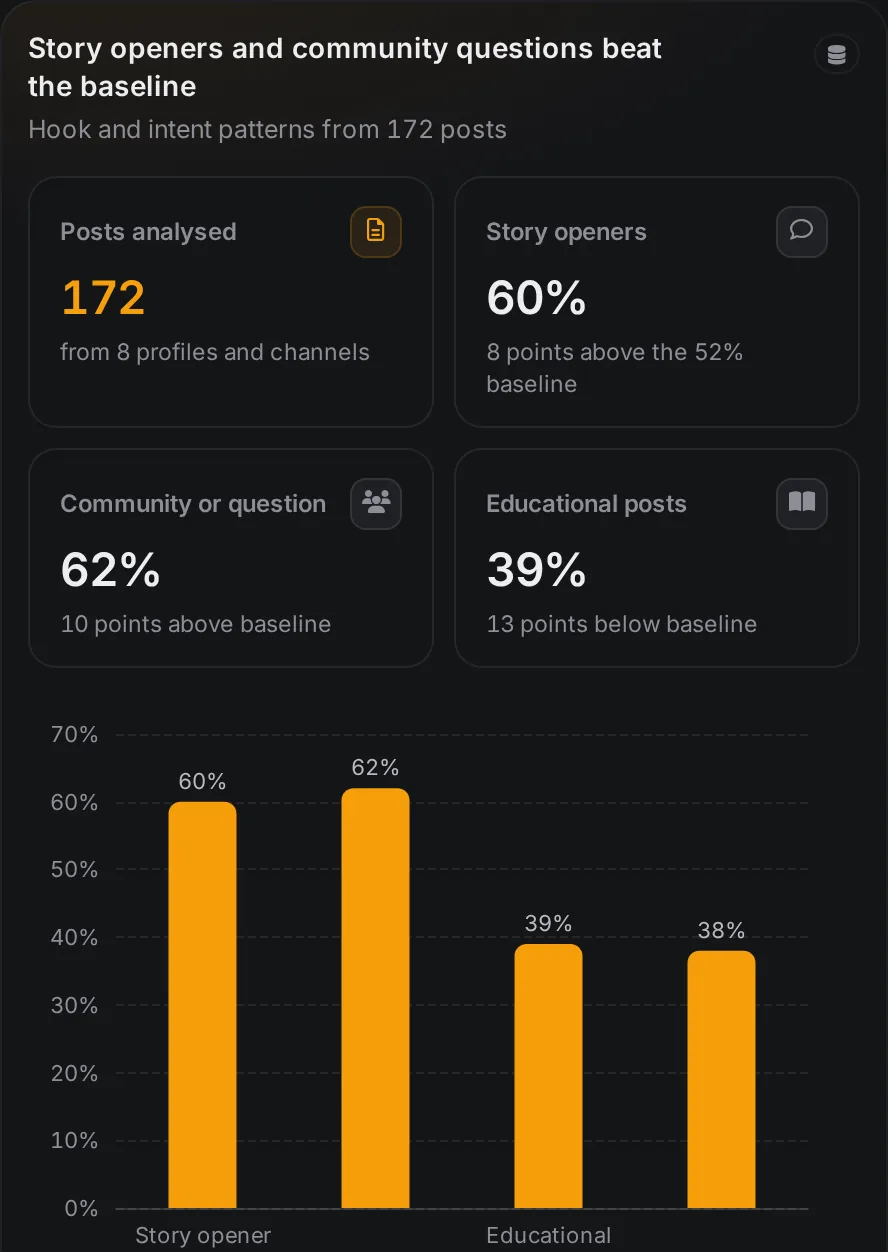
Social analysis of 172 posts with hook patterns compared to the baseline
A real analysis of 172 posts. Profiles replaced.
  • Customer voices instead of assumptionsWhat your audience writes in forums, comments and reviews, as the basis for topics and wording.
  • A metric for every textRankings, AI citations and leads per page, not just visitors.
  • Suggestions for the next topicWhich questions are still missing and which competitors get cited there.

From a real project

An app with a website in German, English and Spanish, two established competitors, hardly any visibility. Anonymized, the client agreed. We do not report results yet because implementation is ongoing.
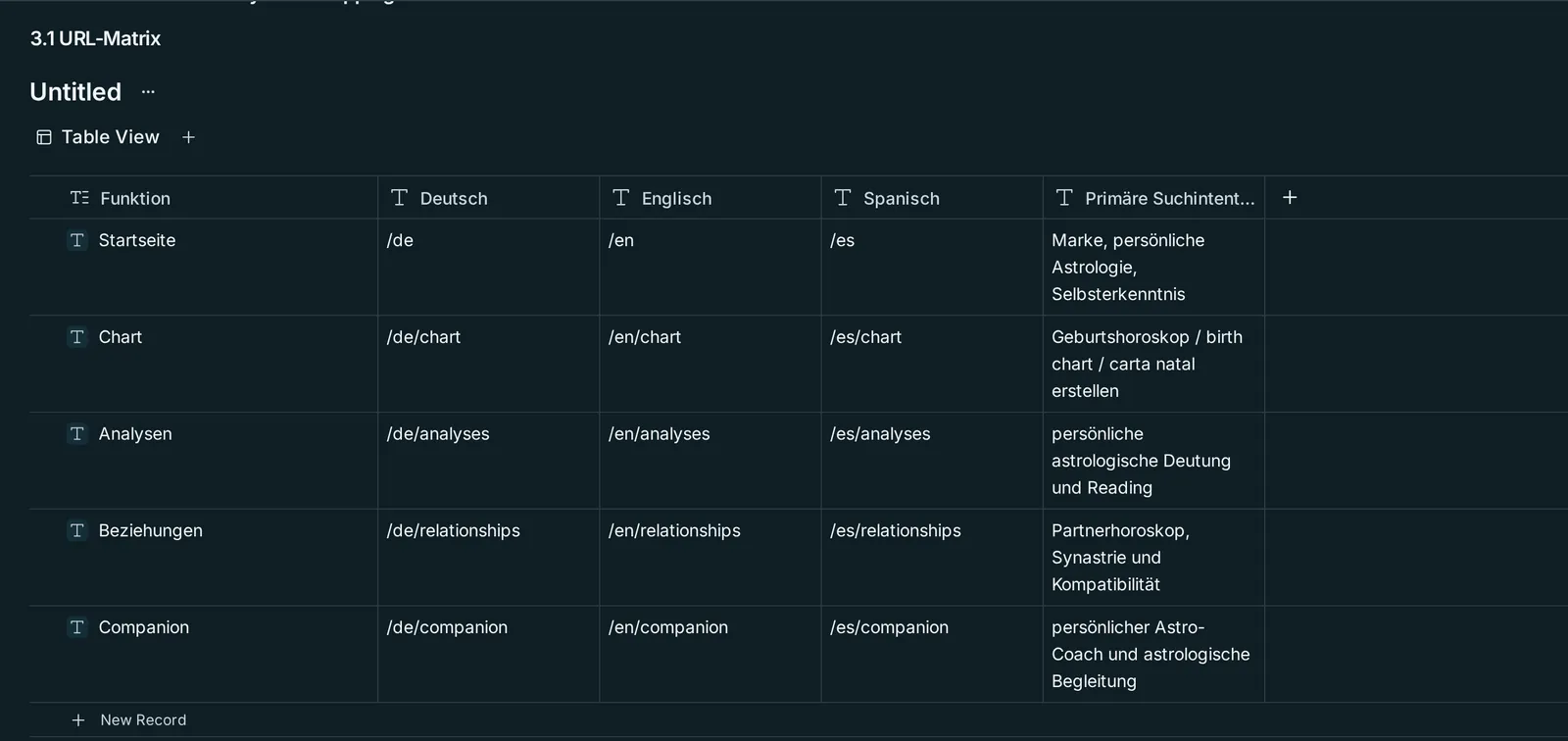
URL matrix from the implementation paper: page roles with a URL per language
URL matrix: each page role with its own URL per language. Interface in German.
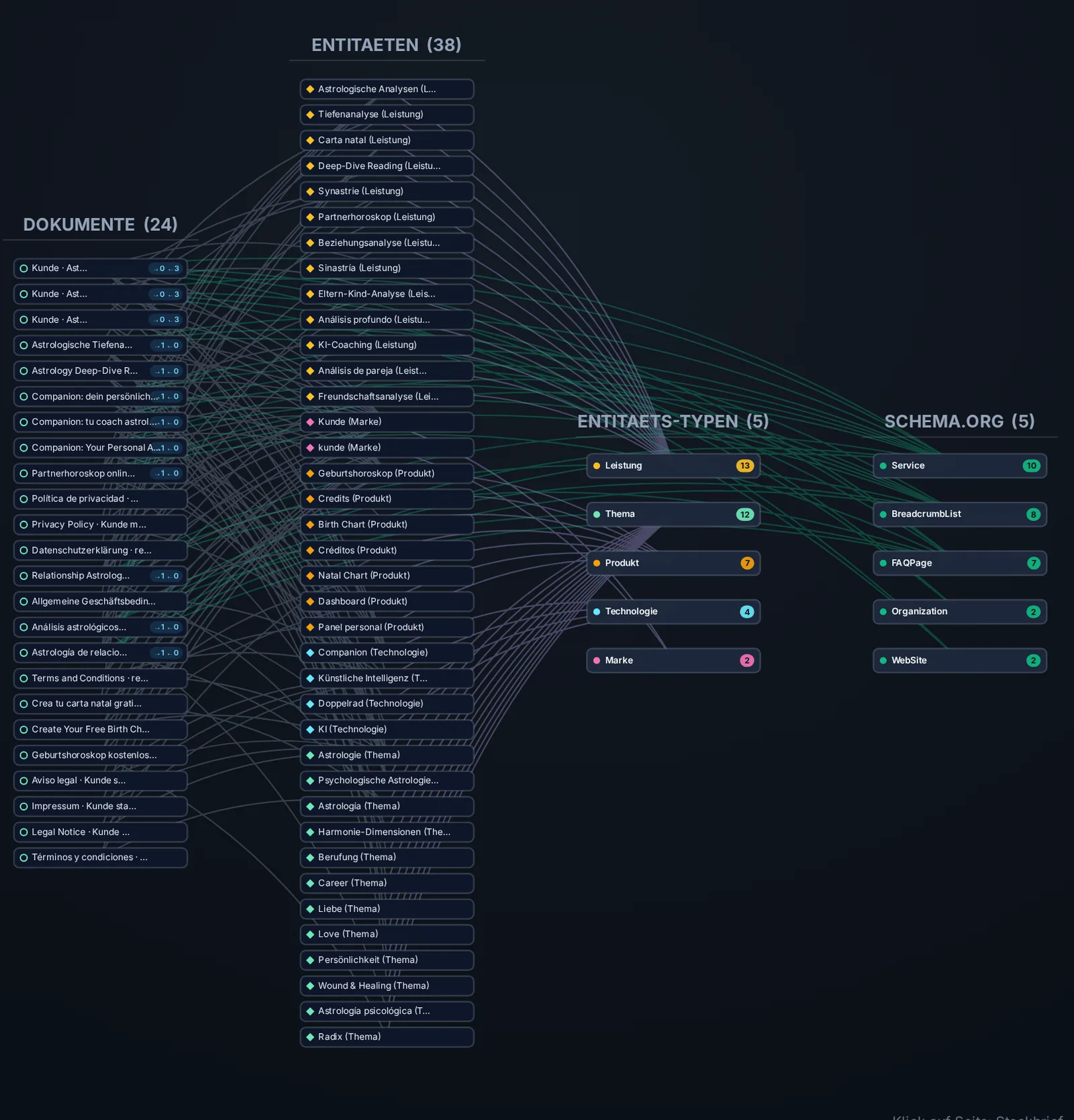
Mind map with documents, entities, entity types and Schema.org types of the client website
Mind map: 24 pages, 47 entity nodes, only 10 pages with structured data.
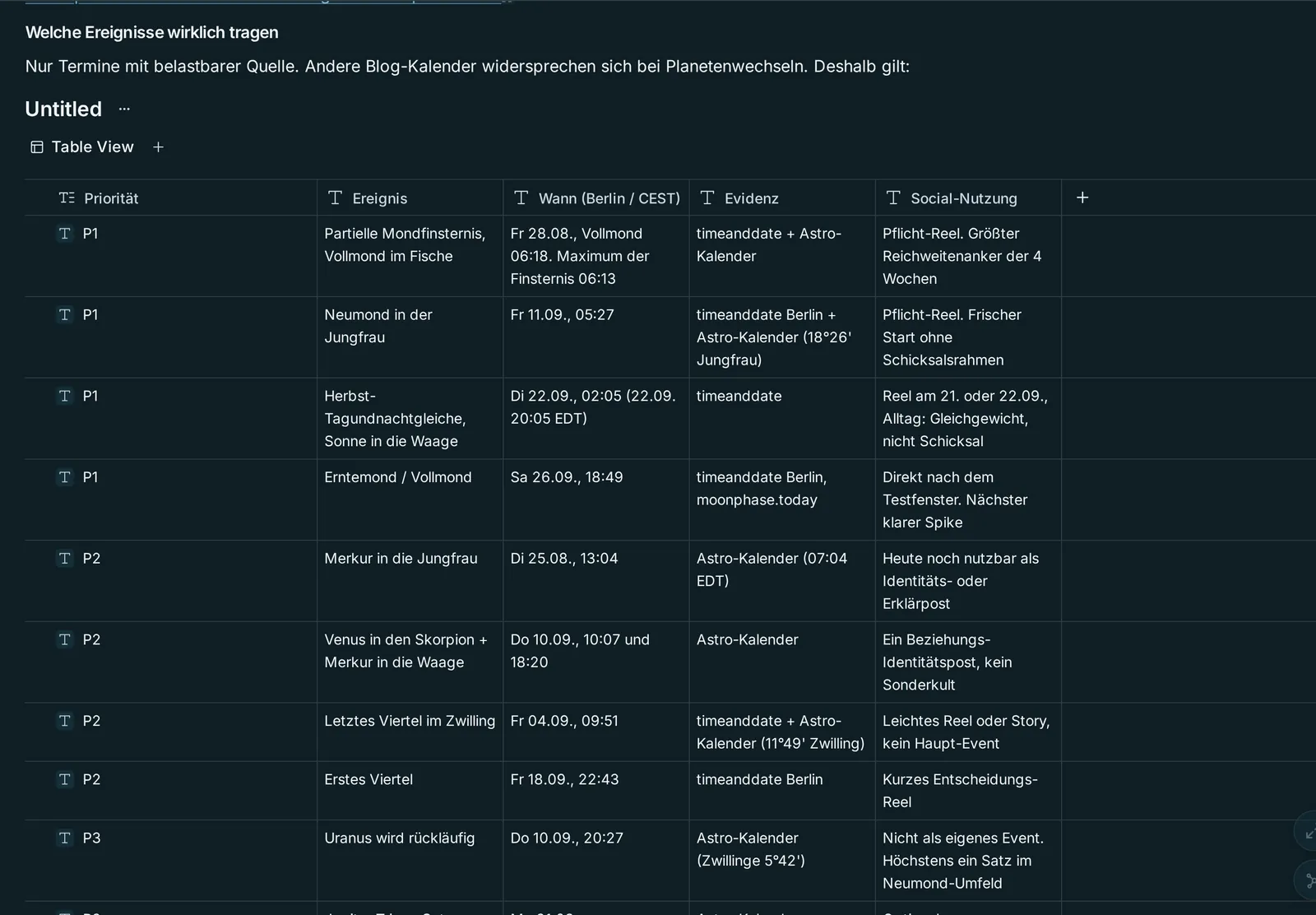
Instagram editorial plan with a prioritized table of occasions and sources
Editorial plan: occasions by priority, each with a source.

How we work together

UlliDrawn owl with an orange scarf and a notebook

Everything in one workspace, traceable.

  • Shared workspaceanalyses, texts, decisions and crawl data in one place
  • Approvalsyou see every text before it goes live
  • Multilinguala separate keyword map per language, no one to one machine translation
  • Your inputexpertise and approvals, we handle the rest
  • Reviewif you like, we check the implementation on your website

FAQ about content strategyIncluding the questions for which AI cites other providers today.

What is a content strategy, and how is it different from classic SEO?
SEO takes care of technical setup, content and links for Google. The content strategy decides beforehand which content is needed at all, for which question and in which form, so it can rank in Google and be cited by AI systems.
SEO and GEO
How does content get cited by ChatGPT, Perplexity and Google AI?
In our data test, a citation was most strongly linked to whether a page answers the question directly and whether sections start with the answer. Claims backed by numbers and sources help as well.
Data test
Which formats are worth citing?
Pages that answer a question right at the start, comparison tables, FAQ with structured data and analyses with your own numbers that exist nowhere else.
How do I create content that AI will cite?
By having every section answer one specific question with the answer in the first sentence. Then add evidence: your own numbers, prices, experience and sources. In our data test, the direct answer was most strongly linked to citations; lists, tables or short sentences alone brought no proven advantage.
d · a
How does content segmentation for LLM citations work?
AI answers usually take single statements from a section, not whole pages. So every section should make sense on its own: a subheading phrased as a question, the answer in the first sentence, then the details. Avoid references like “see above”, because the section then does not stand alone.
AI spam drowns out real expertise: how do I stand out as an expert source?
With what mass generated text lacks: your own data, real experience, named authors with a profile, and sources that can be checked. That is why we publish our studies with method, raw data and author.
d · t
What does E-E-A-T mean for AI citations?
E-E-A-T stands for experience, expertise, authoritativeness and trust. Google uses it to assess content quality, and according to Google the same basics apply to AI Overviews as to regular search. E-E-A-T is not a separate factor for AI citations, but pages with clear authorship and evidenced statements rank better and are therefore more likely to be found as a source.
What happens to existing content?
We review it first. Good pages get reworked and updated, duplicates get merged, and only where a question is missing do we create a new page.
Can we use AI for content without hurting quality?
Yes, if people contribute expertise, their own data and the final review. Google says it judges the quality of a text, not whether it was written with AI. Mass produced pages without added value, however, violate the spam policies. What works: AI for outline and draft, experts for content, numbers and sign off.
Who writes the content?
We do, based on your data and expertise. From you we need subject matter input, approvals and your own numbers if available. If you prefer, we deliver only strategy and briefings and your team writes.
How is success measured?
Per page role with its own metrics: non brand impressions, click-through rate, leads and mentions in AI answers. All in the platform, traceable per page.
Does it work in several languages?
Yes. Each language gets its own keyword map and separately written texts, plus clean hreflang. In the project above it was three languages with 23 pieces of content.
What does a content strategy cost?
It depends on the number of pages, languages and competitors and on whether we also write. In the first call we clarify the scope and then give you a fixed quote.

Which of your content
already has potential?

In the first call we show where competitors get cited and you do not, and which pages pay off first. Free, no obligation, 30 minutes.

Your contact: Aredi Dragusha, [email protected]